On 13 February 2026, I took part in the Swiss Patient Forum 2026 at Hotel Ador in Bern as a representative of Angiodysplasia Switzerland. The event was organised by EUPATI Switzerland, the European Patients’ Academy on Therapeutic Innovation. The day was held under the theme “New perspectives on participation: co-creation with patients in research and healthcare”. Around 80 people from patient organisations, research, public authorities and industry came together to explore this forward-looking topic in greater depth.
Co-creation – what does that mean in practice?
Co-creation (CC) refers to equal collaboration between patients, researchers, professionals and industry – from the formulation of a research question through to the implementation of projects. Patients are not merely study participants who provide data, but active contributors who help shape the process. The presentation by the Swiss PPIE Network captured it perfectly: “Healthcare is strongest when people are partners, not just users.” When the experiential knowledge of those affected is systematically included, more relevant, more transparent and more sustainable solutions emerge.
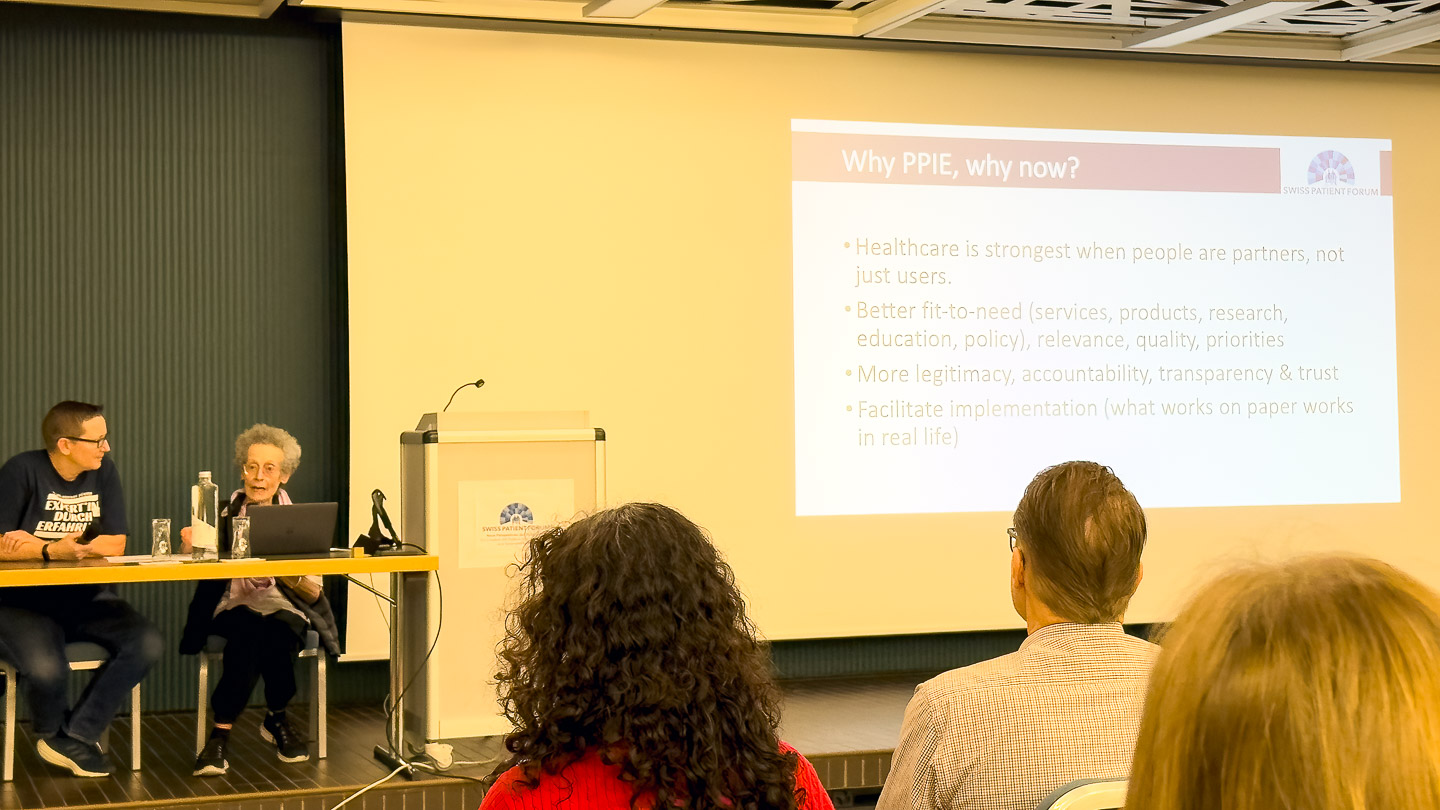
Workshops: barriers and opportunities in co-creation
There were three parallel workshops both in the morning and in the afternoon. In the workshop “How research and innovation can benefit from co-creation”, key insights were recorded on flipcharts: co-creation must be accessible to everyone – not only to well-connected patients. The distinction between research participants and co-creators is crucial: the former provide data, while the latter actively help shape the process. Co-creation is an iterative process; failure is part of it too and creates opportunities for learning. Most importantly, however, it is about collaboration on equal footing and with mutual appreciation. The experiential knowledge of patients is real expertise.
Other workshops explored ethical questions and governance in co-creation, the role of digital platforms and tools, and the use of AI in the field of PPI (Patient and Public Involvement).
Two Panel Discussions with a Shared Direction
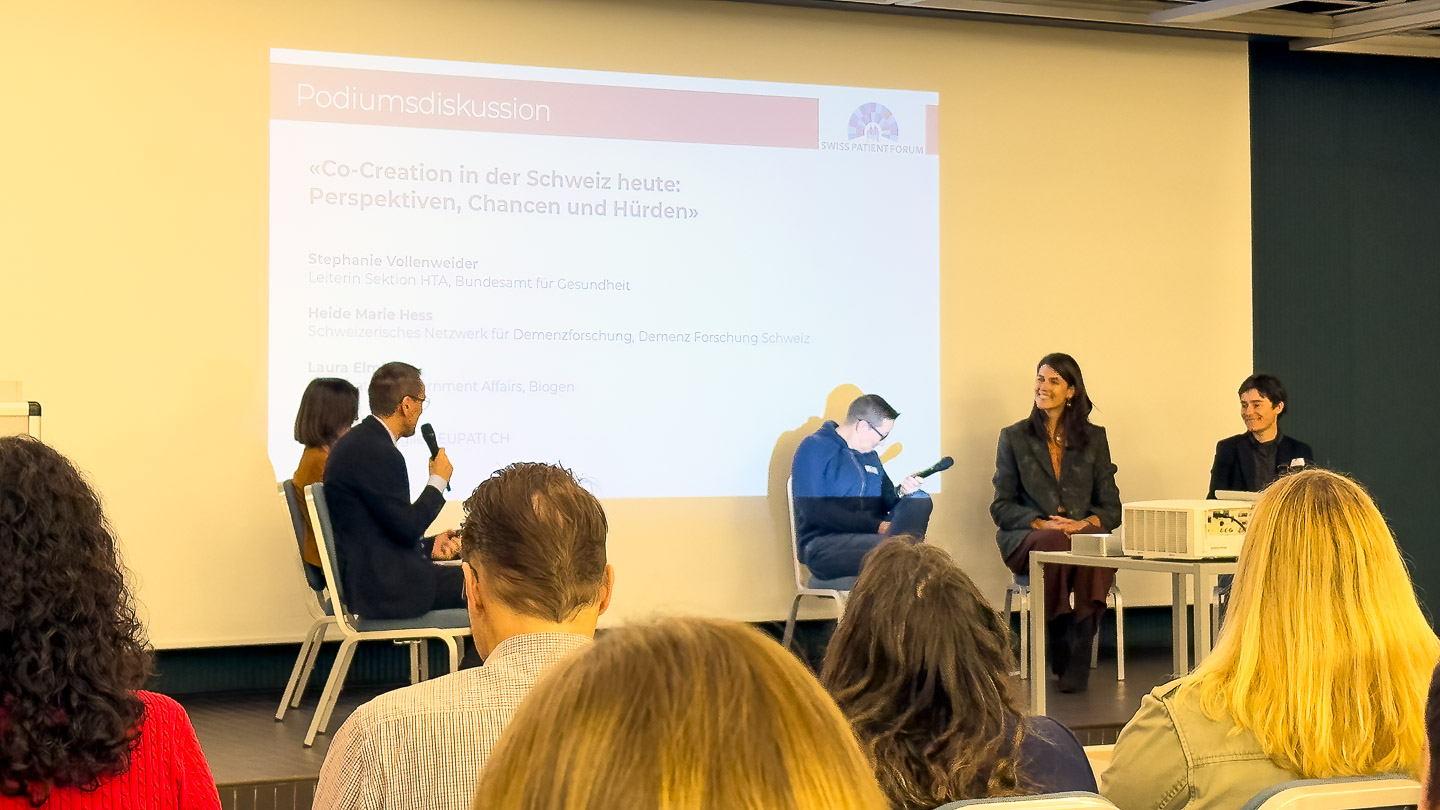
The first panel discussion – “Co-creation in Switzerland today: perspectives, opportunities and barriers” – made one thing clear: Switzerland has encouraging approaches, but structural barriers are slowing progress. A lack of recognition of patient expertise, unclear mandates and insufficient funding remain key stumbling blocks. Representatives from the Federal Office of Public Health (HTA section), Dementia Research Switzerland and Biogen discussed opportunities and limitations openly.
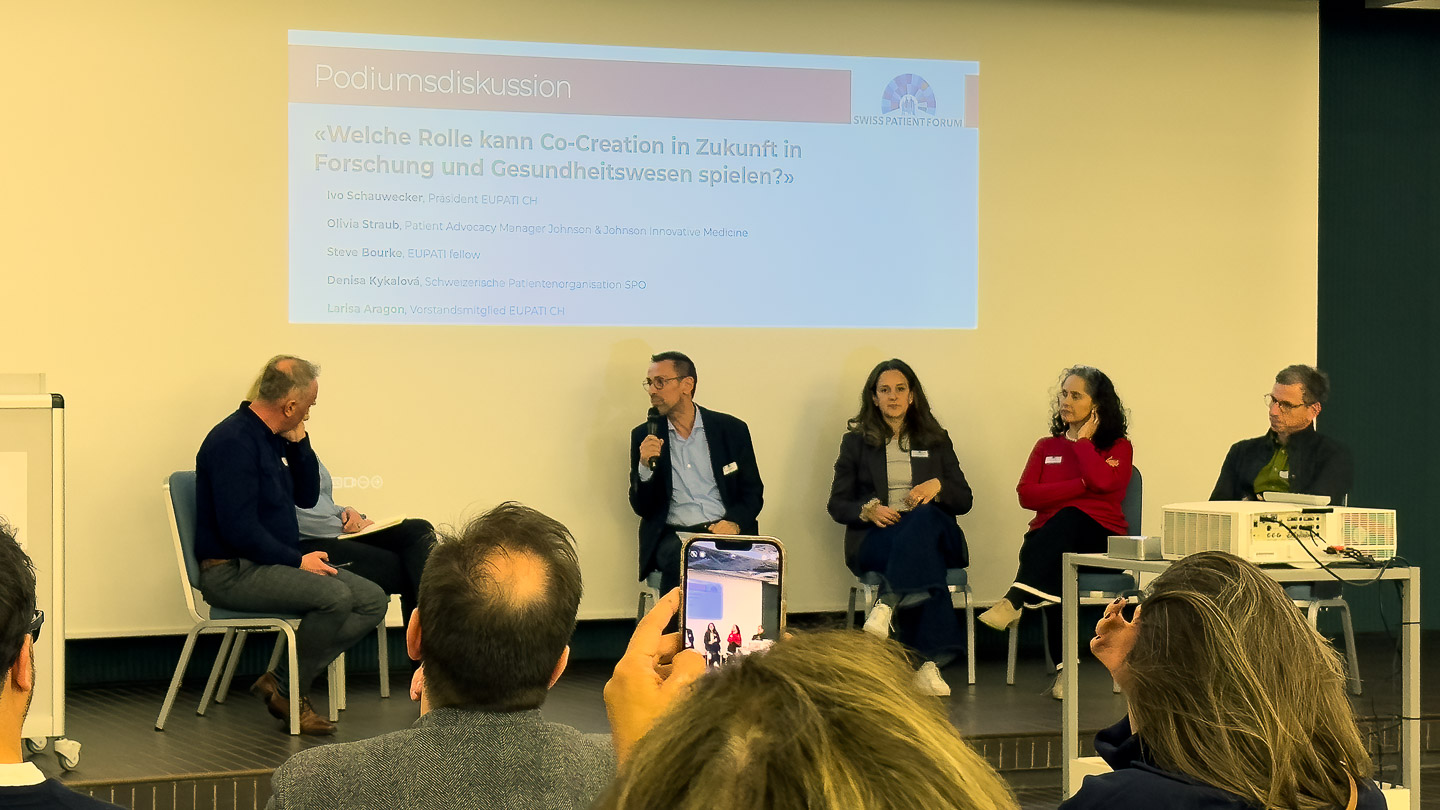
The closing panel “What role can co-creation play in the future?” drew a constructive conclusion: we need spaces for genuine encounters on equal terms – and the willingness of all involved to understand co-creation not as a token exercise, but as a real added value.
What does this mean for Angiodysplasia Switzerland?
As a self-help organisation for people living with a rare vascular disease, we know that the experiential knowledge of our members is unique and also of great value for research and care. In our field, there is an additional factor: many affected people are compelled to develop their own multidisciplinary view of their condition because they have to navigate between different specialties, examinations and treatment approaches. It is precisely this interconnected experiential knowledge that makes the patient perspective especially valuable. The Swiss Patient Forum 2026 once again showed me that the voices of people living with rare diseases must not only be heard in research and health policy, but must also be recognised as genuine expertise and actively included. I look forward to bringing the impulses from this day into the work of our association and to further deepening contacts with networks such as EUPATI CH and the Swiss PPIE Network.