Congress Innsbruck, 4–5 April 2025
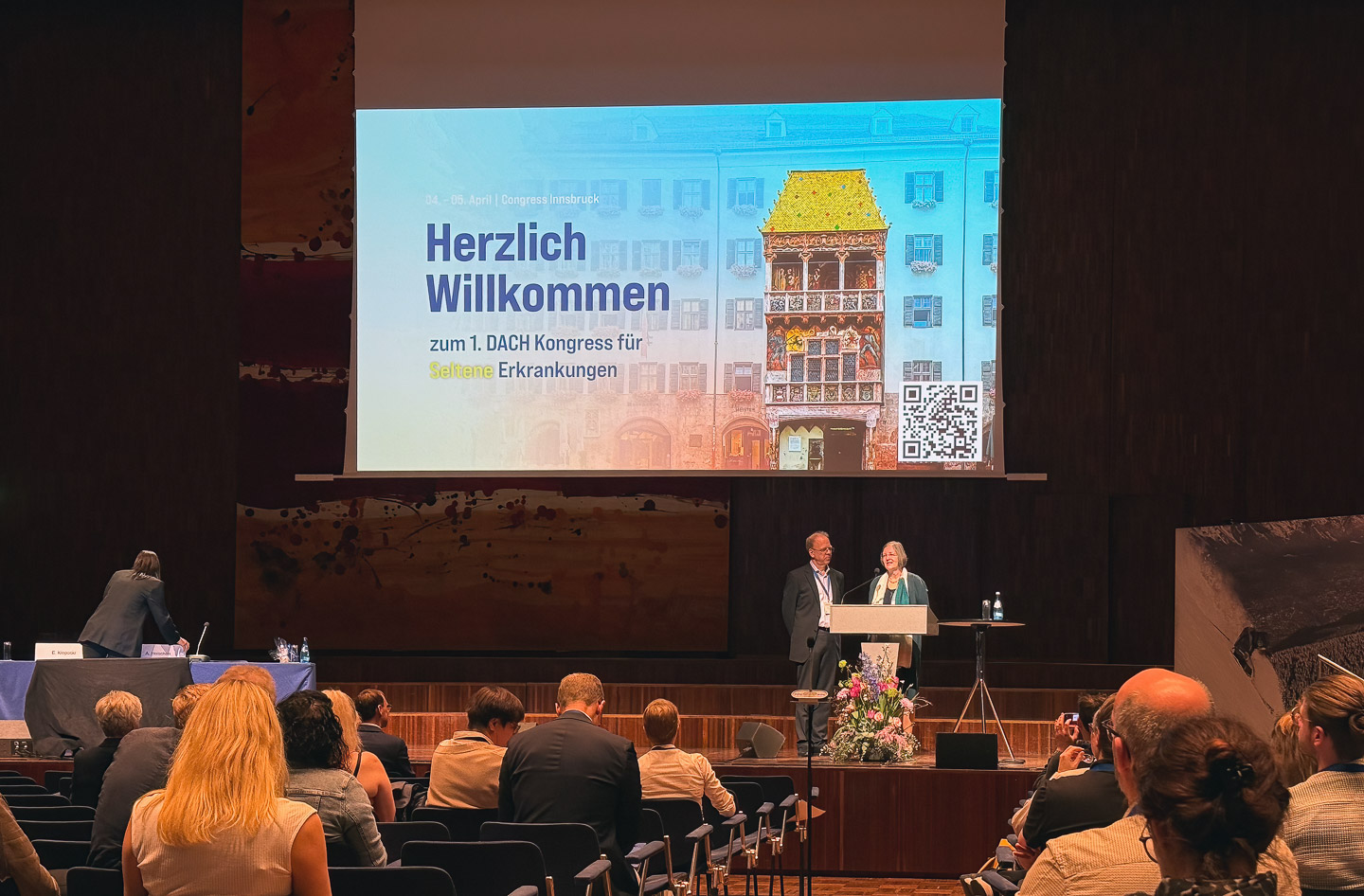
In Europe, around 30 million people are affected by a rare disease – and there are more than 7,000 such diseases worldwide. A disease is considered rare if it affects fewer than 1 in 2,000 people. Despite these numbers, many affected individuals struggle for years before they finally receive a correct diagnosis.
This was precisely the focus of the first joint congress of the German-speaking countries Germany, Austria and Switzerland on rare diseases, held at Congress Innsbruck on 4 and 5 April 2025. As a participant from Switzerland, I had the opportunity to experience this meeting of specialists, researchers, patient representatives and affected individuals firsthand – and it showed impressively how much progress is being made in this field.
Genetic testing as a key to diagnosis
The dominant theme of the congress was the growing importance of genetic testing for the diagnosis of rare diseases. Most rare diseases have a genetic cause – meaning they arise from an error in the genetic material that can either be inherited or occur spontaneously. Once this error is identified, treatment can be targeted more precisely.
The problem is that affected individuals wait, on average, more than five years before receiving a correct diagnosis. This long and exhausting search is often referred to as a “diagnostic odyssey.” Modern methods for fully decoding the genome – known as genome sequencing – could provide a decisive breakthrough here.
One particularly striking presentation focused on an Australian study on the “One-Test-For-All” concept – in other words, one comprehensive test instead of a long sequence of individual examinations. This genomic test provided a diagnosis for 47% of patients within three days – and led to a change in treatment for 60% of those diagnosed (Lunke et al., Nature Medicine 2023).[1] In other words, almost every second patient received within days a diagnosis they had previously been searching for over many years – and in more than half of those diagnosed, treatment was subsequently adjusted.
Kym Boycott from the University of Ottawa (Canada) presented a particularly powerful form of genome sequencing: so-called “long reads”. Put simply, this method reads genetic material in longer segments, making it possible to detect abnormalities that remain hidden with conventional methods – much like understanding a text better when reading whole sentences rather than individual words.[2]
Jan Korbel from the European Molecular Biology Laboratory (EMBL) in Heidelberg presented new ways of making larger changes in the genome visible – so-called structural variations. These are not just single “letter mistakes” in the genetic code, but larger rearrangements: entire sections of the genome may be missing, duplicated, moved or incorrectly arranged. Such changes can cause severe diseases and have so far been difficult to detect.
Personal note as an affected person: For those of us living with a vascular malformation – an abnormal formation of blood vessels – an accurate genetic diagnosis is far more than just an entry in a medical record. Better knowledge of the underlying genetic defect can, on the one hand, open up concrete paths toward drug treatment and, on the other hand, improve our understanding of how and why such vascular malformations develop and change over time. Advances in genetic diagnostics therefore have immediate practical significance for us.
The issue of cost was also addressed: in Germany, the MV GenomSeq project was presented, aiming to ensure that comprehensive genomic tests can in future be covered by statutory health insurance. After all, even the best diagnostics are of little use if they remain financially out of reach for most patients.
Rare diseases in Switzerland
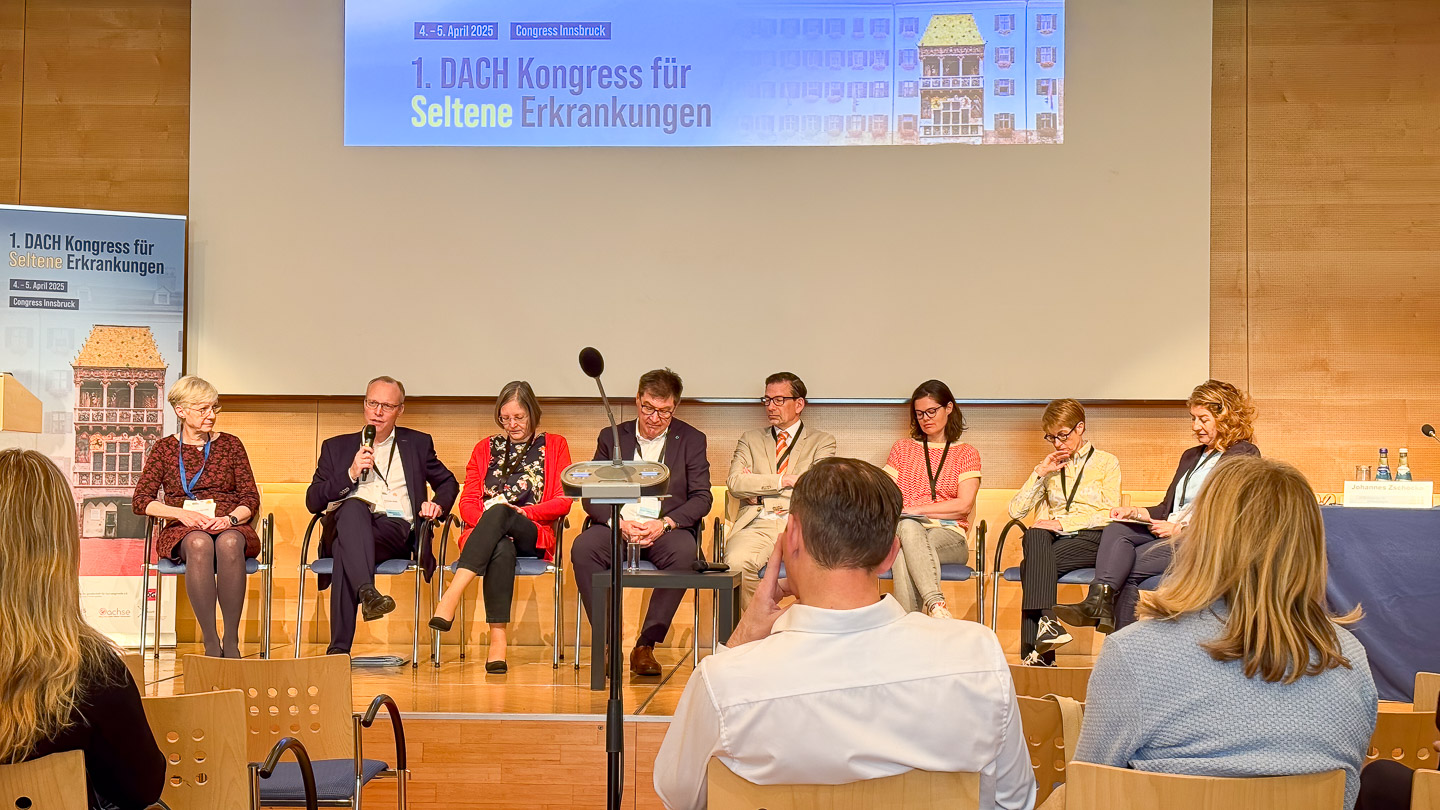
Prof. Dr. med. Matthias Baumgartner from Zurich Children’s Hospital and board member of kosek (National Coordination of Rare Diseases Switzerland) gave an overview of the Swiss situation. How is care organised? Where do we currently stand? And how is Switzerland – although not an EU member – still integrated into European networks?[3] For people affected in Switzerland, it is important to know that there is a national point of contact and that Switzerland actively participates in international collaboration.
Stronger together: European networking
One of the congress’s central messages was clear: no country can solve the challenge of rare diseases alone. Precisely because each individual disease is so rare, international cooperation is essential – so that experience, data and knowledge can be shared.
The European joint project JARDIN (Joint Action Rare Diseases Integrated Network) was presented as an initiative intended to build a common infrastructure for all of Europe. Part of this is also a harmonised definition: what exactly is an “undiagnosed patient”? According to the international disease database ORPHANET, this is someone for whom no clear diagnosis could be established despite all modern diagnostic possibilities. A common language of this kind is a prerequisite for doctors and researchers from different countries to work together effectively.
The “Genome of Europe” (GoE) initiative was also presented: each country is to collect the genetic information of at least 100,000 representative citizens and make it available as a reference – comparable to a genetic “normal atlas” of the European population.[4] Such reference data help doctors recognise whether changes in a patient’s genome are in fact disease-causing.
Patient voices and the digital future
Mag.ª Dominique Stiefsohn from Pro Rare Austria reminded the audience what this is ultimately about: the people affected. She presented the work of European patient advocacy – and made clear what it still needs in order to represent affected individuals truly effectively. Scientific progress must always also reach patients in a meaningful way.
Finally, the Centre for Rare Diseases in Bonn offered a look into the future: artificial intelligence (AI) is intended to support doctors in diagnosis – not replace them, but complement them. What matters here is an open “error culture,” meaning a willingness to acknowledge misdiagnoses and learn from them. The platform Unrare.me was also presented – a kind of digital self-help network that connects affected individuals, experts and resources. Its creators describe it as “Tinder for people without a diagnosis” – a deliberately pointed phrase, but one that captures the essential idea: creating connections where otherwise there may be isolation and uncertainty.[5]
Conclusion
The 1st DACH Congress on Rare Diseases sent a clear signal: Germany, Austria and Switzerland are moving closer together. Better genetic testing, digital networking, European cooperation and a stronger voice for affected individuals – the direction is right. The task now is to bring these advances into practice, so that long and exhausting diagnostic odysseys can give way to shorter paths toward the right treatment.
Sources / Notes
- [1] Lunke S. et al. (2023): Integrated multi-omics for rapid rare disease diagnosis on a nationwide scale. Nature Medicine 29, 1681–1691. https://www.nature.com/articles/s41591-023-02401-9
- [2] CARE for RARE / CHEO Research Institute Ottawa: research programme on undiagnosed diseases. https://www.care4rare.ca
- [3] kosek – National Coordination of Rare Diseases Switzerland. https://www.kosek.ch
- [4] 1+MG Initiative / Genome of Europe. https://framework.onemilliongenomes.eu
- [5] Unrare.me – networking platform for rare diseases. https://www.unrare.me
- [6] Official DACH-SE Congress website. https://dach-se.org
- [7] Pro Rare Austria (Austrian patient organisation). https://www.prorare-austria.org
- [8] JARDIN – Joint Action on Rare Diseases. https://jardin-ern.eu