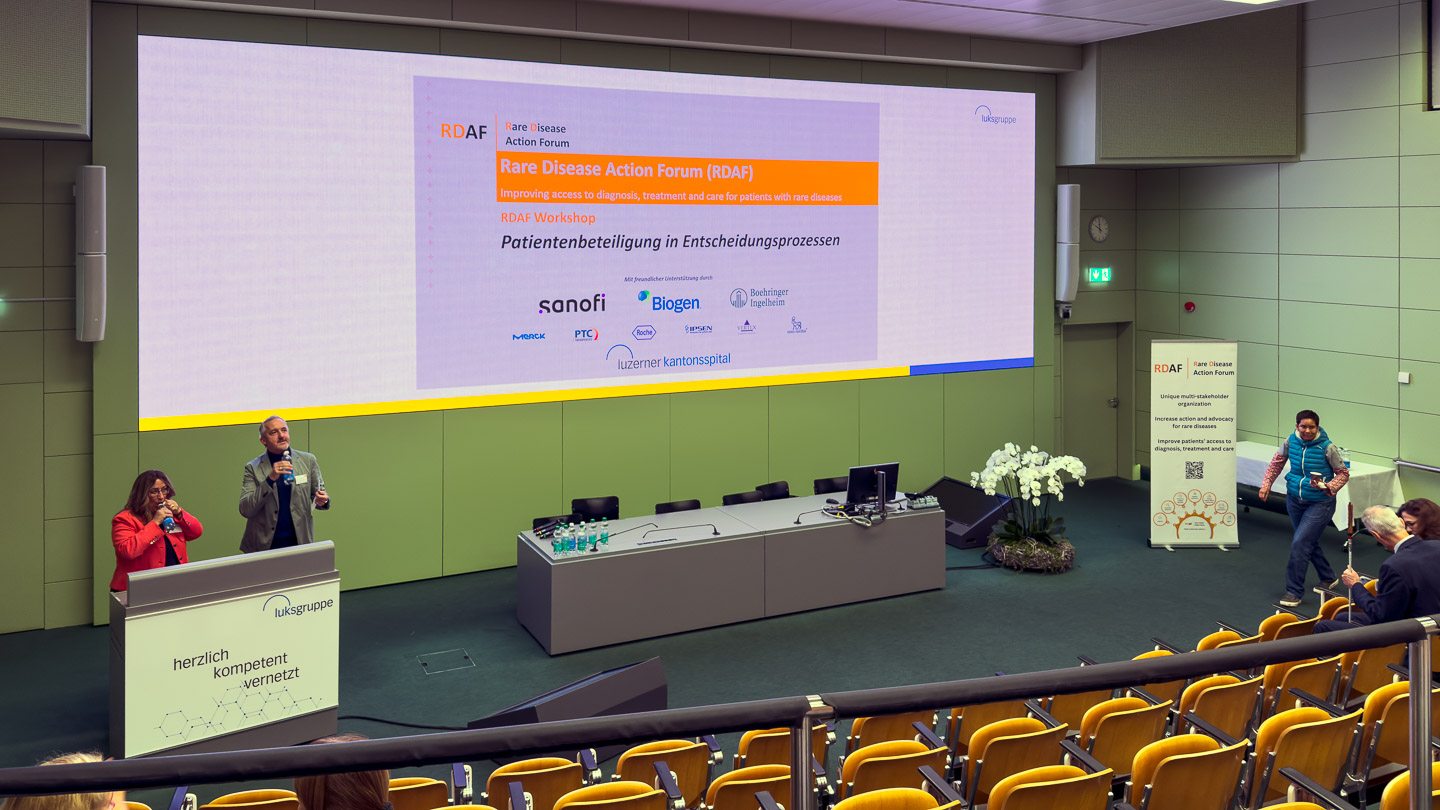
On 27 November 2025, the RDAF workshop “Patient Participation in Decision-Making Processes” took place at Lucerne Cantonal Hospital (LUKS). The RDAF invited participants with the following statement:
“Together with patients and representatives from patient organisations, public authorities, academia and industry, we are developing concrete strategies to strengthen patients as equal partners in the healthcare system.”
Topics of the day:
🔸 How participation can be actively shaped
🔸 Building trust through open dialogue
🔸 Successful best practices
🔸 Shaping the future together
These topics are genuinely important to us – which is why we were very pleased to take part and are glad to share the key insights from the day here.
The Rare Disease Action Forum (RDAF)
The RDAF is a unique multi-stakeholder organisation in Switzerland whose goal is to improve access to diagnostics, treatment and care for patients with rare diseases. Within this national network, shared patient pathways and treatment recommendations are coordinated, education and research are promoted, and the involvement of affected individuals is actively advanced.
In Switzerland, more than 500,000 people are affected by a rare disease – and many of them still do not have secure access to diagnosis, therapy and specialised care. The RDAF brings together patients, healthcare professionals, hospitals, research institutions, industry, insurers and public authorities in order to close this gap.
Joint brainstorming: what is needed for genuine patient participation?
Among other things, the workshop explored what is needed for genuine patient participation. The discussion showed just how complex and multi-layered this topic is.
With regard to patient organisations, there was broad agreement that funding is a central issue: without adequate resources, patient organisations cannot professionally fulfil their representative role and therefore cannot sustainably strengthen the legitimacy of patient representatives.
The pharmaceutical industry showed itself open to stronger patient involvement. Its most important contribution, it was said, is to create spaces for exchange and organise events that help bring together patients and patient organisations.
Among representatives of the public authorities, the main focus was on participation rights and legal framework conditions. There were calls to create legal foundations so that patient advisory boards can be promoted. The key phrase was: “Being heard” – patients must be given a real voice in approval and reimbursement processes.
Panel discussion
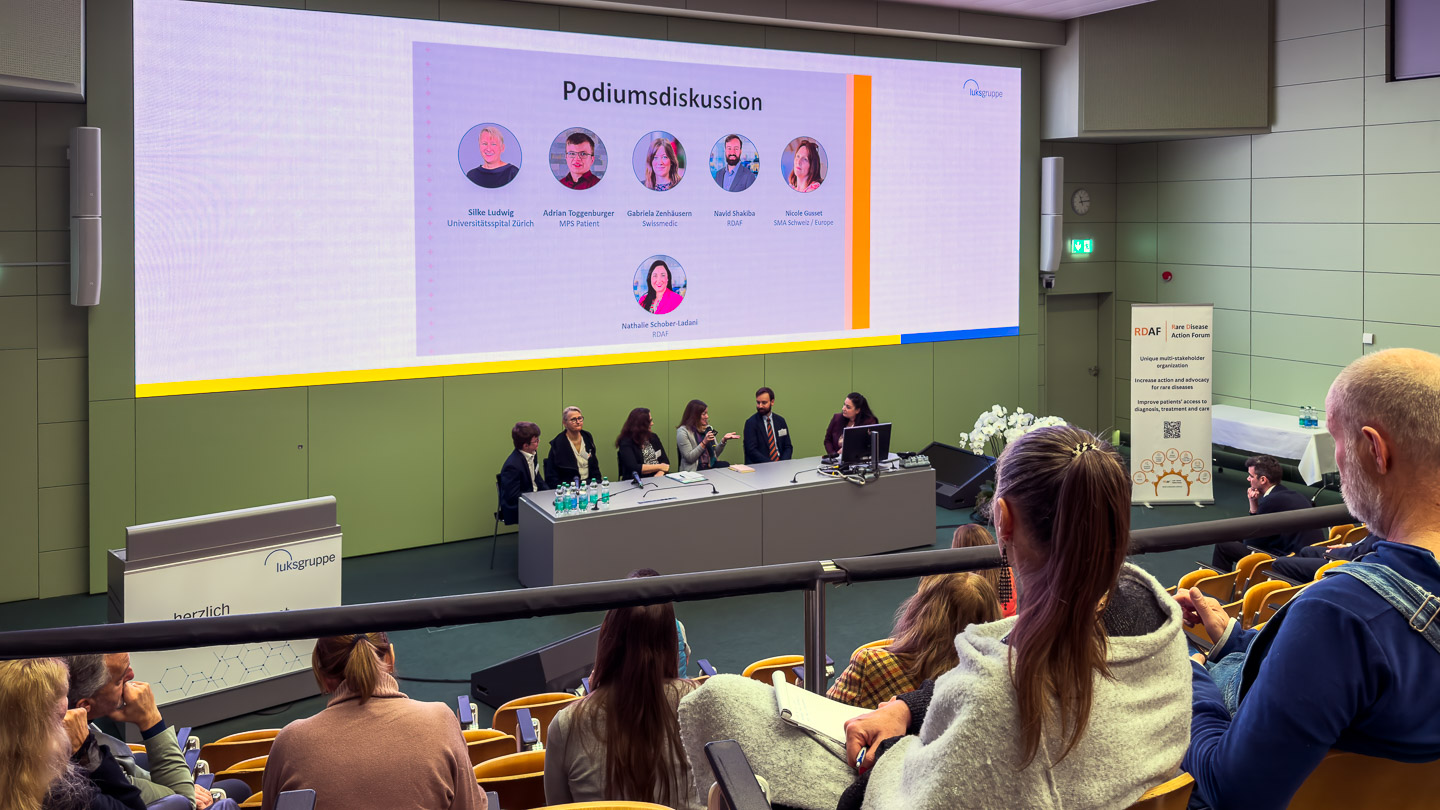
The workshop concluded with a lively panel discussion featuring six representatives from medicine, public authorities, patient advocacy and the RDAF itself:
- Silke Ludwig – University Hospital Zurich
- Adrian Toggenburger – MPS patient and patient representative
- Gabriela Zenhäusern – Swissmedic
- Navid Shakiba – RDAF
- Nicole Giosset – SMA Switzerland / Europe
- Nathalie Schober-Ladani – RDAF
The discussion focused on what structural and cultural changes are needed so that patient participation exists not only on paper, but is actually practised in the daily work of hospitals, public authorities and industry. There was agreement that genuine participation requires resources, legitimacy and political will – from all sides.
Conclusion: an important step in the right direction
The RDAF workshop at Lucerne Cantonal Hospital showed that awareness of the need for genuine patient participation is present – and growing. The challenges are well known: insufficient funding, unclear structures, language barriers and legal anchoring that is still too weak.
At the same time, it became clear that the other stakeholders – pharma, public authorities and insurers – also show a genuine willingness to recognise patient organisations as equal partners and to take concrete steps. The new Federal Act on Measures to Combat Rare Diseases (FAMRD) provides an important legal foundation for this.
For the Swiss Angiodysplasia Association, participation in this workshop was a valuable opportunity for networking and direct exchange with decision-makers. We will continue to work actively to ensure that the voice of affected people is heard in all relevant processes.