On 16 and 17 October 2026, the Children’s and Adolescents’ Hospital of the University Medical Centre Freiburg hosted the 7th annual meeting of DiGGefa, the German Interdisciplinary Society for Vascular Anomalies. For the Swiss Angiodysplasia Association, the meeting was an exciting opportunity to build connections and take home a great deal of knowledge.
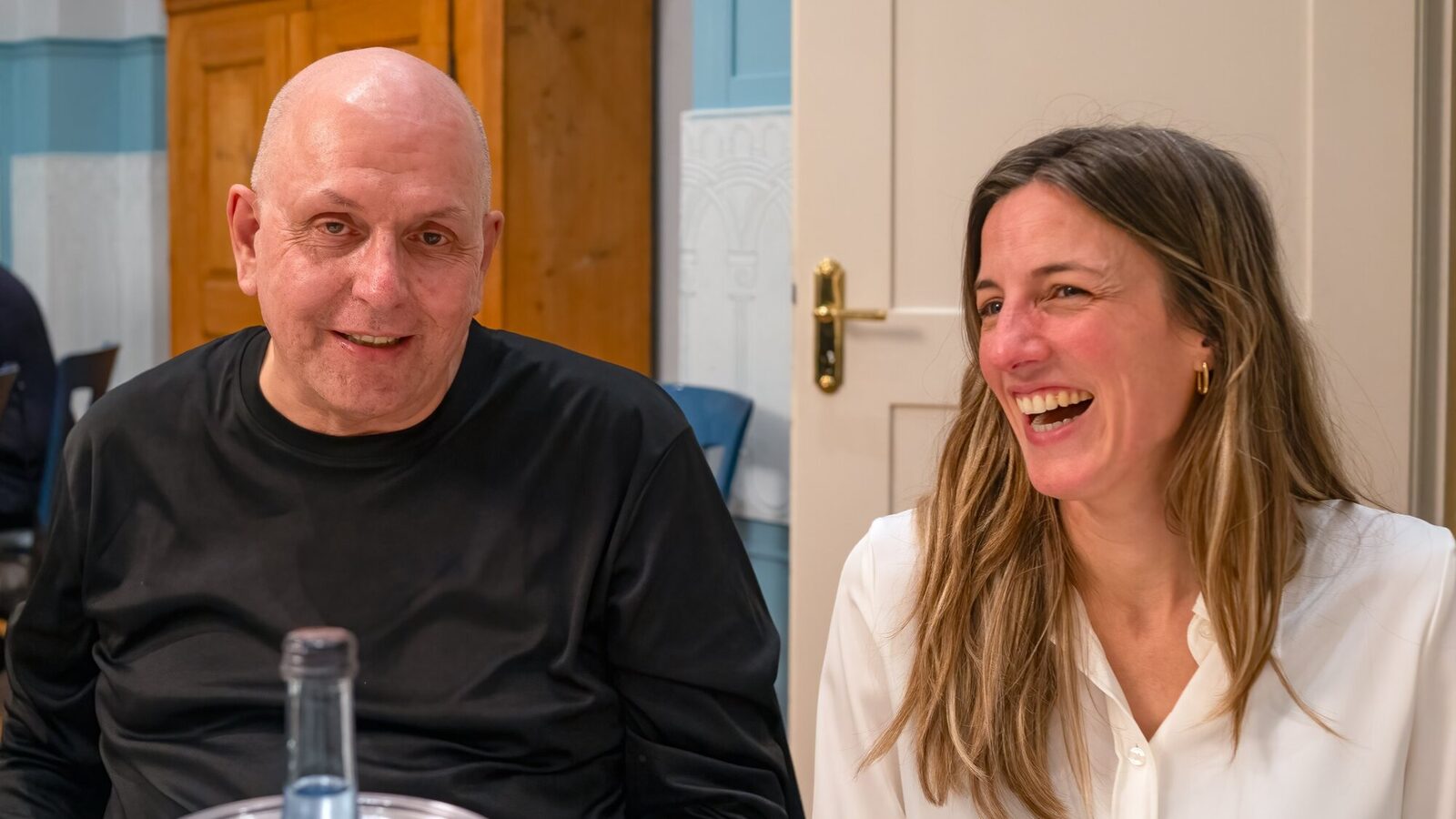
DiGGefa is aimed at professionals – but patient organisations had a firm place in the programme. The meeting ran over two days. On Friday, a masterclass for young doctors gave an overview of the different vascular anomalies and their genetic basis. The day ended with a social evening at the Dattler restaurant on the Schlossberg, high above the city. In a relaxed setting, there was a chance to continue the day’s discussions and to keep building connections between patients and doctors.

On Saturday, the focus was more on research, managing recurring problems and new therapies. The openness with which doctors sought their colleagues’ advice on difficult cases was exemplary. They consulted one another across federal states and hospital boundaries.
Many disciplines around one table
The meeting brought together specialists in radiology, paediatric surgery, dermatology, haematology, orthopaedics, genetics and psychosocial care. They showed what active collaboration across disciplines can achieve. That is exactly what patients need, because the changes caused by vascular malformations do not stop at the boundaries of medical specialties.
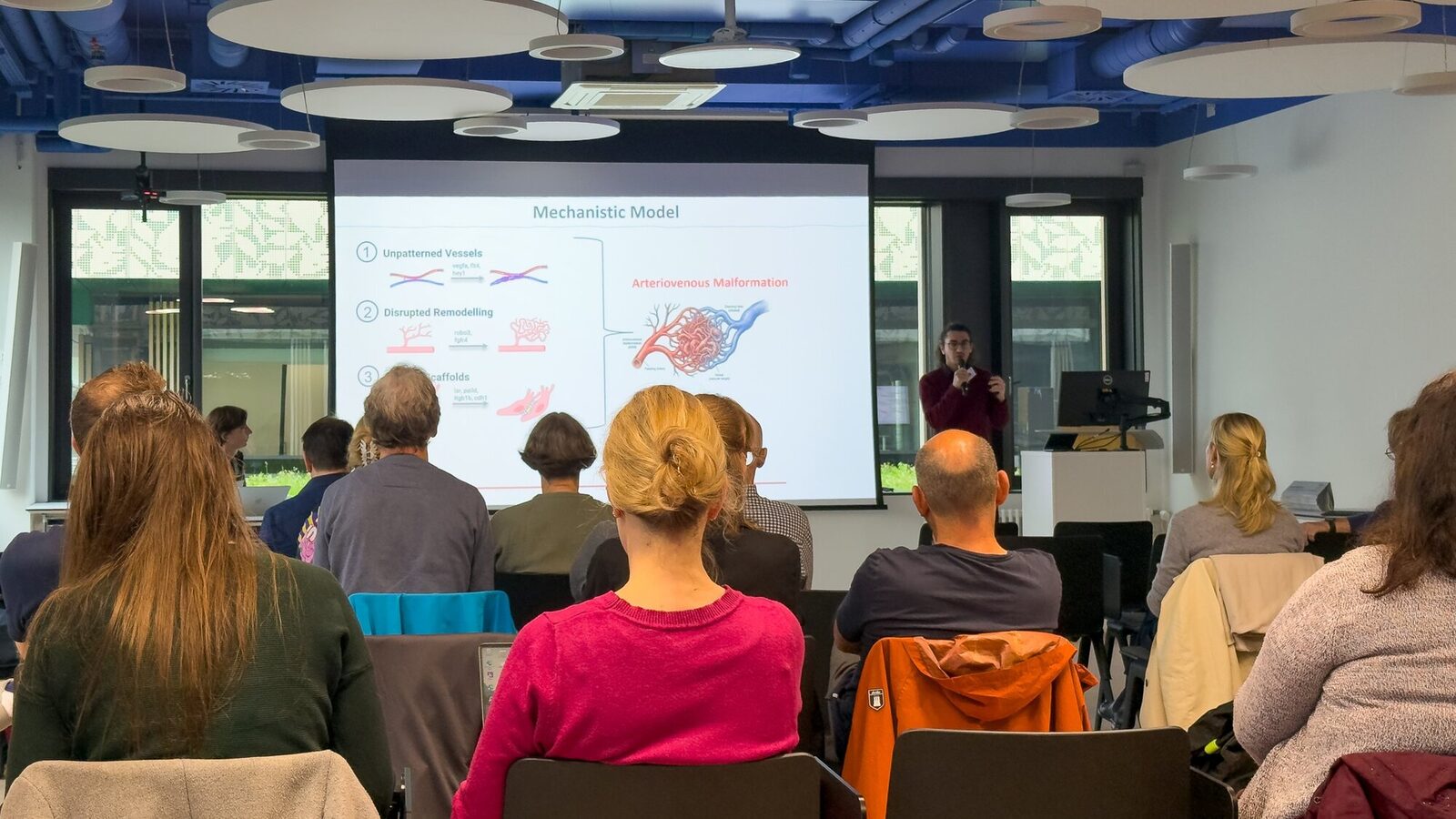
One topic was the ISSVA classification of vascular anomalies. A basic distinction is made between fast-flow and slow-flow malformations. For cases that do not fit into any category, there is the designation “potentially unique”. In future, atlas-type image collections from ISSVA are expected to make classification easier.
One message from the talk on slow-flow malformations will reassure many: not every malformation needs to be treated. What matters, however, is a careful assessment, if necessary with a second opinion at a specialist centre. Many patients report a long journey before receiving the right diagnosis.
In Germany, centres are linked in the German Reference Network for Vascular Anomalies (DRN) and, at European level, in the VASCERN network. In online case conferences, hospitals can present difficult cases and discuss them together. The discussion also raised the idea of collecting the lessons from these case discussions more systematically, for example in a registry. For Switzerland, where the Swiss VASC-RN network is still being set up, this was a vivid example.
Difficult cases across borders
Each session included a set of “difficult cases”. Hospitals presented particularly complex courses in order to look for solutions together with the experts from Germany, Austria and Switzerland. Salzburg, for example, presented a case in which a wound dressing made from specially processed fish skin was used. Switzerland was also involved: PD Dr Sarah Bernhard of the Inselspital Bern, a member of our medical advisory board, brought a case to the discussion.
From a Swiss perspective in particular, this cross-border exchange is especially valuable and exemplary. In a small country, each centre sees only a few people with a particular rare malformation – which makes it all the more important for the few specialists to share their experience. When experience is shared across national borders, patients are not the only ones who benefit.
New medicines: hope with open questions
Medicines are playing an ever greater role. In lymphatic malformations, sirolimus has been used for several years, and the cases presented showed that malformations can shrink markedly under treatment. For patients with a PIK3CA mutation, there are also targeted medicines that act precisely on this signalling pathway.
Targeted medicines are also being used in arteriovenous malformations. However, PD Dr Friedrich Kapp showed that a malformation can grow again after treatment is stopped, so treatment often lasts a long time. Even with very rare genetic changes, identifying a mutation can open the way to a suitable medicine. This makes genetic testing more important. Two different questions are involved. For the diagnosis, pathology examines the tissue under the microscope: what type of malformation is it, and has a tumour been ruled out? A small core biopsy is often enough for this. Genetic analysis, by contrast, looks for the change in the genetic material that causes the malformation. This mutation is usually found only in the affected cells and not in the blood. As explained in the talk on biopsy, this is why a larger tissue sample from the malformation itself is often needed.
The speakers remained cautious: long-term data are still lacking, and not every treatment works the same way for everyone. For patients there is also a practical hurdle – whether health insurance will cover the new medicines.
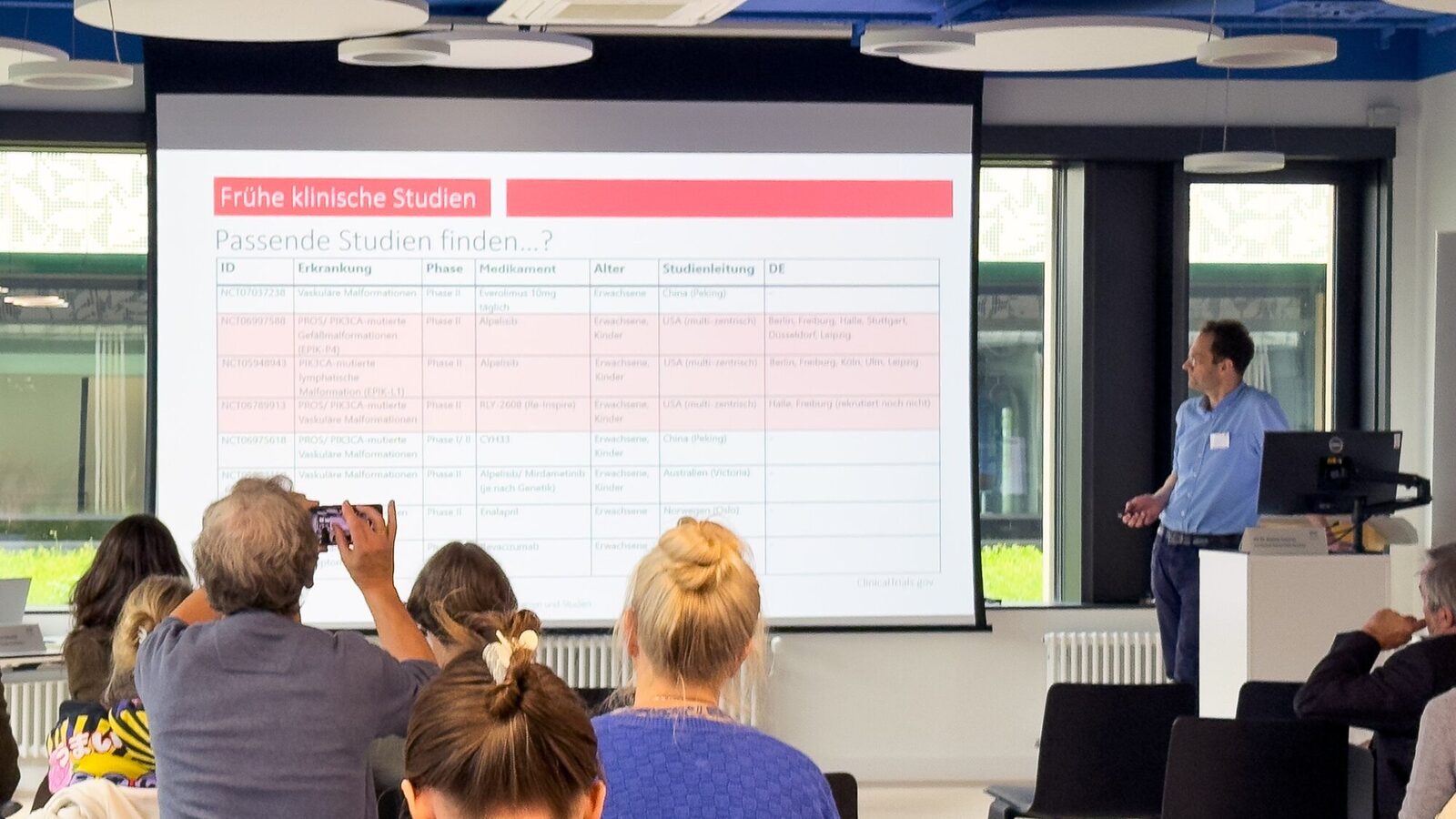
PD Dr Friedrich Kapp outlined what comes next with an overview of early clinical trials. Several of them are also running at German centres. Alpelisib is being tested in two phase II trials in adults and children: in PIK3CA-related vascular malformations (EPIK-P4) and in lymphatic malformations (EPIK-L1). A new active substance, RLY-2608, is designed to selectively inhibit the altered form of the enzyme; the trial (Re-Inspire) is also due to run in Halle and Freiburg but is not yet enrolling patients there. Further trials are under way in China, Australia and Norway. In the field of blood clotting, a small trial comparing apixaban with a placebo is also planned.
Everyday life matters too
Many contributions dealt with things that patients deal with every day:
- Compression and lymphatic drainage: compression stockings should be made to measure and adjusted regularly. For children, there are now compression garments that can be put on in seconds. A case of a complex lymphatic anomaly showed how much very good conservative therapy can improve quality of life.
- Pain: chronic pain is one of the most common complaints. The new German S3 guideline recommends treating the cause first and then treating the pain step by step, according to need.
- Self-management: speakers repeatedly stressed how important it is to train children and parents so that they can manage the condition well themselves in everyday life.
- Growth: differences in leg length can only be corrected while the growth plates are still open. If a difference is only noticed at the age of 14, it may be too late. Regular orthopaedic check-ups during growth are therefore important. Bleeding into the knee joint can also damage the cartilage and should be treated early.
- Blood clotting: vascular malformations can change blood clotting. Clotting values are therefore checked carefully before procedures. On anticoagulation, it was noted that patients and parents often accept tablets more readily than injections.
Wanting a child: less fear, more support
We were particularly moved by Dr Susanne von der Heydt’s talk on pregnancy with a vascular malformation. The data are thin: there are mainly surveys, retrospective analyses and case reports. It is known that the risk of thrombosis can be increased, especially during pregnancy. Recommendations therefore include counselling and imaging in advance, thrombosis prophylaxis, compression and an individual birth plan. Anyone taking medication for their malformation should raise the wish for a child early – this applies to women and men alike. For contraception, the specialists advised avoiding oestrogen-rich preparations where possible.
In a joint survey with the German patient association, 19 of 34 women had given birth to a total of 27 healthy children, mostly without complications – small numbers, but they still show that blanket warnings are misplaced.
Many women had been told they could not have children – and they had them anyway. Almost all respondents do not feel supported by their gynaecologist. Gynaecology should therefore be more closely integrated into the networks. Genetic counselling, too, sometimes involves misinformation: women with a confirmed mosaic condition had, for example, been told that it was hereditary.
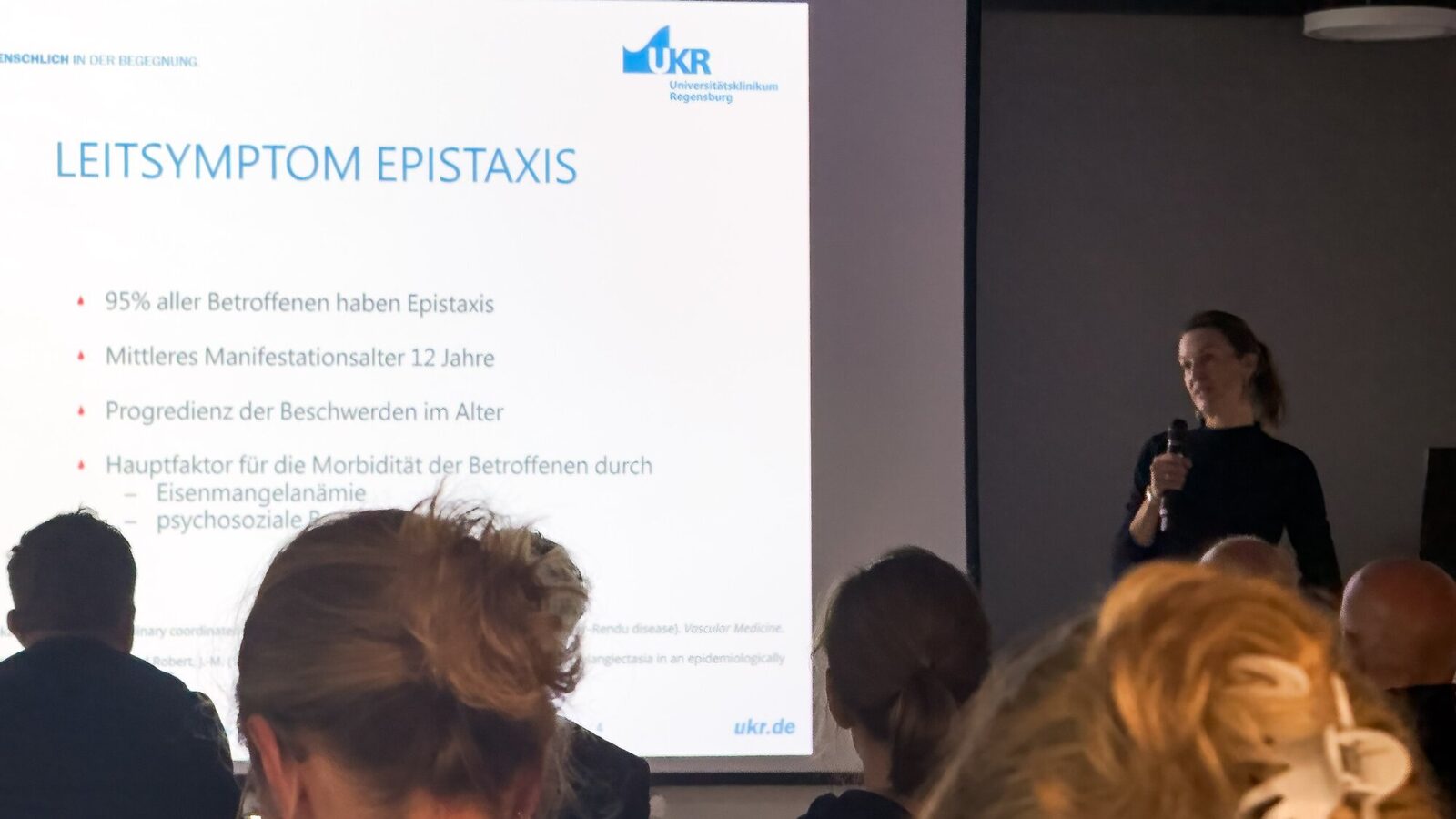
PD Dr Kornelia Andorfer reported something similar for Osler’s disease (HHT): many women know nothing about their condition before a pregnancy. Because vascular malformations in the lungs can already occur in children, children from affected families should be examined early and pregnancies prepared for in a targeted way.
Related reading: Liane Kirchner, vice-president of our association, attended the annual meeting of the DGA at the same time and describes her personal experience in the article “Wanting a child with a vascular malformation” ↗
More than medicine
Rebekka Riedlinger and Stefanie Messner presented psychosocial support at the University Medical Centre Freiburg. Social work and psychology help there in crises and in coming to terms with the diagnosis, but also in very practical ways: with applications, organising therapies such as physiotherapy, or questions about school and transport. Their role also includes putting families in touch with patient support organisations.
The transition from paediatric to adult medicine was named as a major unresolved issue. What happens to today’s children when they are 20 and the familiar children’s hospital is no longer responsible? How to accompany young people and their condition into adulthood was also raised in the discussion.
The voice of patients
Andrea Dittler of the German national association for congenital vascular malformations (Bundesverband Angeborene Gefäßfehlbildungen) put follow-up care from the patient’s perspective at the centre of her talk. The association now has 525 members. Since April 2026, it has also been organising online training sessions together with DiGGefa and the DRN.
The feedback from patient support groups is clear: the specialist hospital is often far away, local experience is sometimes lacking, and questions remain open at home. After treatment, patients therefore need three things:
- an understandable plan covering the course, warning signs, medication, wound care and everyday life,
- a contact who can be reached, for patients and for the local practice,
- an agreed follow-up appointment with clear responsibility, by video if medically appropriate.
The German association proposed developing a follow-up checklist together: What do I need at home? Who can help? What happens next?
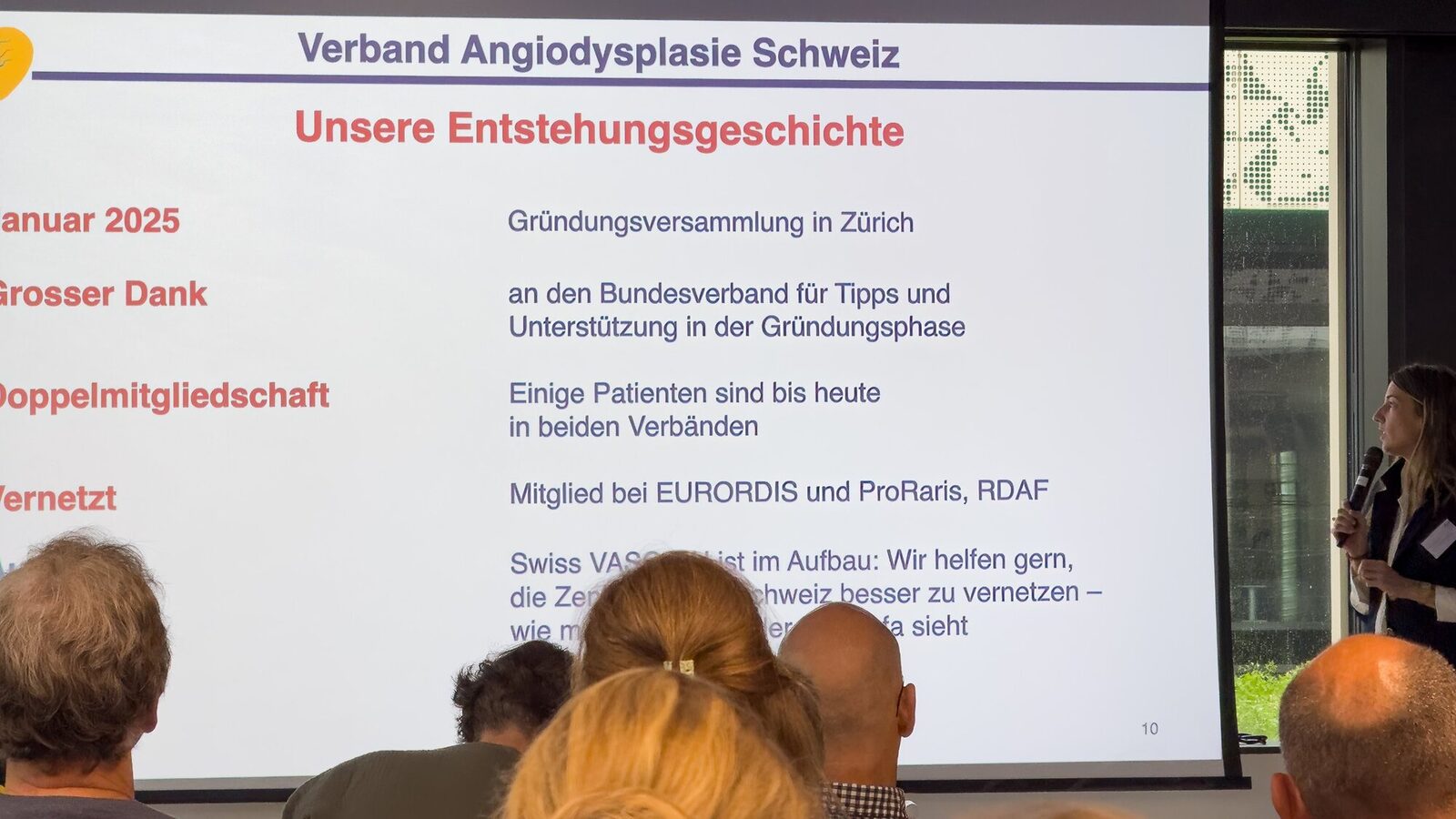
In the same talk, Corinne Blatter presented our Swiss Angiodysplasia Association. As an inspiration, she told the story of the Zurich restaurant Hiltl, whose founder held on to his idea despite all opposition. Our association was founded in this very restaurant in January 2025 and now has 14 members. She explained why a separate Swiss association is needed by pointing to the situation in Switzerland: complicated cost-coverage approvals for medical aids, a health policy strongly shaped by the cantons, few patients in a small country, treatment abroad without any legal entitlement as a non-EU country, and four national languages. In some areas, however, Switzerland also offers advantages for the treatment of rare diseases, for example its relatively high density of hospitals. Corinne Blatter made it clear that our association aims to help set up Swiss VASC-RN, so that Swiss centres become as well connected as we see at DiGGefa.
What we are taking home
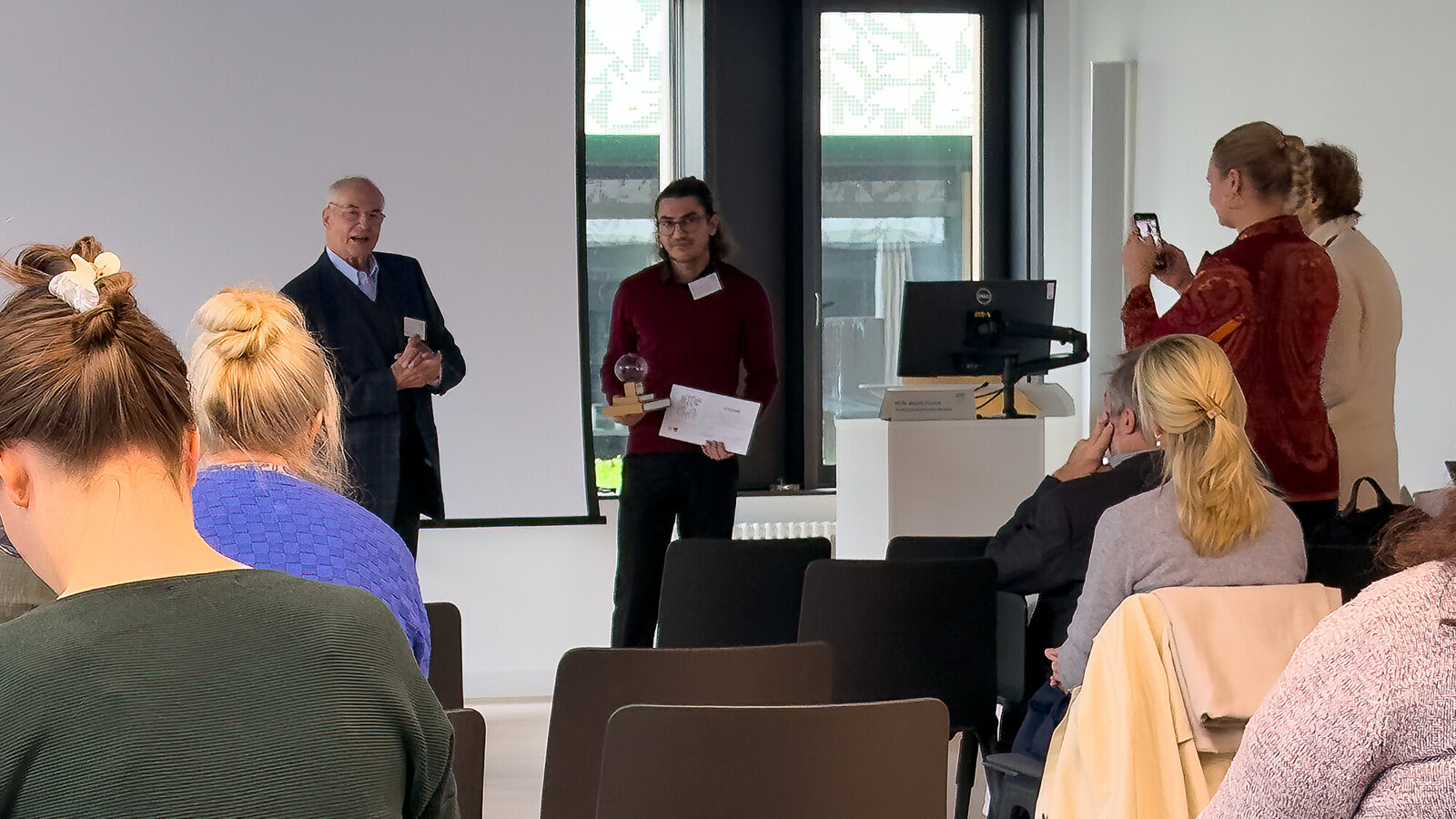
To close, Werner J. Siebert, after whom the DiGGefa research prize is named, paid tribute to the development of the society and stressed: this work helps us, the people affected. We share that view.
For our Swiss Angiodysplasia Association, three impressions stand out. Good care comes about where specialists from different disciplines work together, including across national borders – for Switzerland, with its small case numbers, this is particularly important. Everyday questions such as follow-up care, wanting a child or psychosocial support are taken seriously. And the voice of patients has a firm place in this circle. We are already looking forward to next year’s meeting.
Many thanks to PD Dr Friedrich Kapp and the Freiburg team for the organisation, to DiGGefa and to all the speakers.
More about DiGGefa: German Interdisciplinary Society for Vascular Anomalies (Deutsche interdisziplinäre Gesellschaft für Gefäßanomalien e. V.) www.diggefa.de ↗